Mosquito Lake and Groundwater: How Lake-Adjacent Cortland Homes Battle Wet Basements
Mosquito Creek Lake sets the regional groundwater anchor for Cortland basements. Here is why lake-adjacent homes fight water every April, what the real fix costs, and the sump strategy that actually works on a lake-side lot.
Published · By Matthew Stepanovich
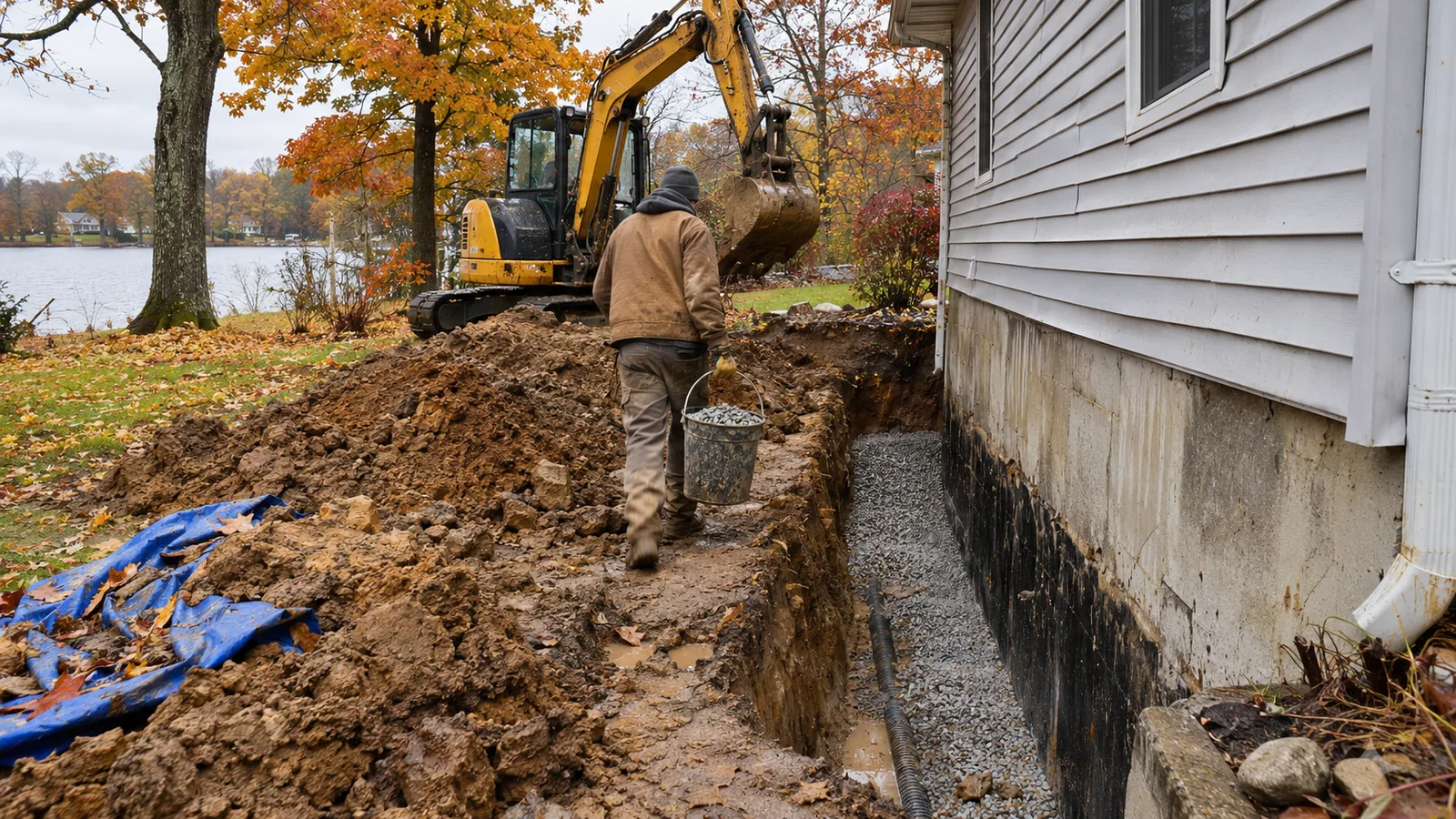
If your Cortland basement is wet every April and you live within a mile of Mosquito Creek Lake or on the Lakeshore Drive corridor or in Bazetta Township, your problem is not a single failed piece of equipment. It is the regional groundwater table rising 2 to 4 feet every spring when the lake pool fills and the snow-belt snow melts. The permanent fix for a chronic lake-adjacent wet basement is almost always a full interior perimeter drain tile system with a dual-pump sump at $6,500 to $12,000, plus a battery backup at $450 to $1,100. A single builder-grade thermoplastic pump will not keep up on this duty cycle.
Why does Mosquito Lake drive Cortland basement water?
Mosquito Creek Lake is the reservoir behind the US Army Corps of Engineers dam on Mosquito Creek, impounding about 6,850 surface acres of water. The lake pool is drawn down in late summer and fall to make room for spring runoff, then refilled between March and May as the snowpack melts and spring rain hits the watershed. That refill raises the lake surface by 3 to 7 feet over roughly 8 weeks.
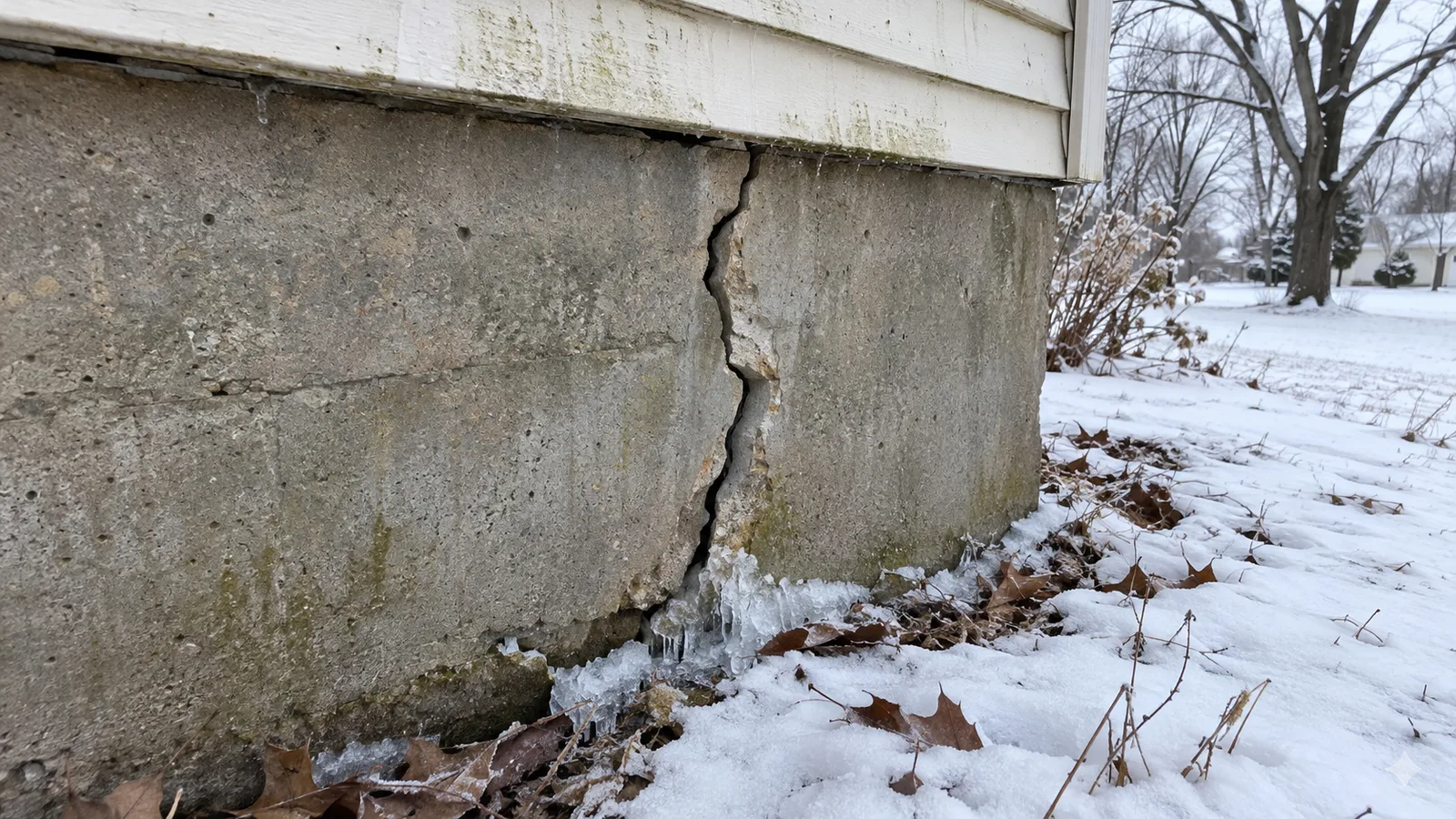
Groundwater in the clay-heavy glacial till soils around the lake is in direct hydraulic connection with the lake pool. When the lake rises, the water table within a mile of the shoreline rises with it, sometimes 2 to 4 feet above winter levels. Any basement footer within that elevation band suddenly finds itself submerged in saturated backfill for 6 to 10 weeks. That is hydrostatic pressure pushing water through every cove joint, every block core, and every hairline crack in the foundation.
Which Cortland streets feel it worst?
The streets closest to the lake and the Mosquito Creek corridor see the biggest spring water-table rise. The Lakeshore Drive corridor, the lots along Mecca Street on the Bazetta Township side, and the older 1960s and 1970s ranches scattered on the small streets off State Route 46 near the state park entrance all run on active sumps 6 to 9 months out of 12. The farther east you are toward downtown High Street and the Cortland Opera House, the lower the groundwater impact, and by the time you are near State Route 5 and the Trumbull County Fairgrounds you are on a different hydraulic regime.
What does the fix cost for a lake-adjacent Cortland home?
Honest ranges on the real fix for a lake-adjacent basement. A full interior perimeter drain tile system with dual-pump sump runs $6,500 to $12,000 installed. The dual pump is a primary cast-iron 1/3 HP pump plus a lag pump sized to kick in when the pit rises faster than the primary can keep up, usually a bigger 1/2 HP pump, which happens during heavy spring thaw events on lake-adjacent streets.
Battery backup is not optional on these homes. Snow-belt power outages and a 2 AM May thunderstorm have cost more Cortland homeowners finished basements than any other single cause we see. AGM battery backup with its own 12V pump adds $450 to $1,100 on top of the install. Deep-cycle battery sized for 6 to 10 hours of continuous pumping will carry you through almost any outage.
If you also have a crawl space off the main basement, which is common on 1960s ranch adds, the crawl needs drainage pre-work plus full encapsulation at $4,500 to $9,500 on top of the main basement scope. Encapsulating a wet lake-adjacent crawl without first solving the water source is a 12 to 18 month mold bloom guarantee. The sequence is drainage first, barrier second.
Why does a single pump fail on lake-adjacent homes?
Three reasons. First, duty cycle. A lake-adjacent sump pit cycles 5 to 20 times an hour during the April to June high-water window, which is 50 to 200 times a day for weeks on end. A builder-grade thermoplastic pump is rated for maybe 50,000 cycles over its entire life. On lake-adjacent duty, that is 12 to 24 months before it burns out.
Second, pit sizing. Builder specs on 1960s and 1970s Cortland homes often dropped a 5 gallon bucket into a hole and called it a sump pit. On lake-adjacent water volumes, a 5 gallon pit short-cycles the pump every 90 seconds during the wettest weeks, which heats the motor and kills it. A proper 20 inch diameter plastic pit liner set 18 to 24 inches below slab holds enough volume to run real cycles of 2 to 4 minutes each, which lets the motor cool between runs.
Third, check valve failure. The one-way valve between the pump and the discharge line fails on lake-adjacent pumps faster than normal because of the high cycle count. When the check valve fails, the discharge line runs water back into the pit after every cycle, so the pump has to re-pump the same water over and over. Pump burns out. We swap the check valve on every pump swap, even if the old one looks OK.
Can lake-adjacent Cortland homes actually stay dry?
Yes, when the install is sized for the real water load. Our work on the Mosquito Lake side streets is almost all full interior perimeter drain tile with dual-pump sumps and battery backup, and those homes run dry through every spring once the install is in. The mistake we see from cheap contractors on these streets is dropping a single $200 builder-grade pump into a 5 gallon bucket and calling it waterproofing. That install is a $600 charge for a 2-year fix, which is worse than doing nothing because it gives the homeowner false confidence.
When to DIY, when to call
DIY is reasonable on lake-adjacent homes for annual maintenance only. Clean out your sump pit every October before spring thaw. Test your battery backup by unplugging the primary pump and watching the backup kick in. Extend your downspout extensions 6 to 10 feet from the foundation to keep roof runoff out of the backfill. Clear window wells of leaves and debris every fall. These are the $0 to $100 moves that keep the install working.
Call a crew the moment you see standing water on the basement floor that was dry a week ago, when your sump is running continuously for more than 10 minutes without cycling off, when the sump discharge is making a wet patch in the yard that will not drain, when any crack in the wall is leaking during rain, or when humidity in the basement is running over 70 percent in spring. On a lake-adjacent Cortland home, these are the signs that the install is undersized for the real water load and the fix window is open.
Call us for a same-day on-site inspection anywhere on the Mosquito Lake side of Cortland or the Bazetta Township grid, and we will put the real scope and the real number on paper by end of day.